
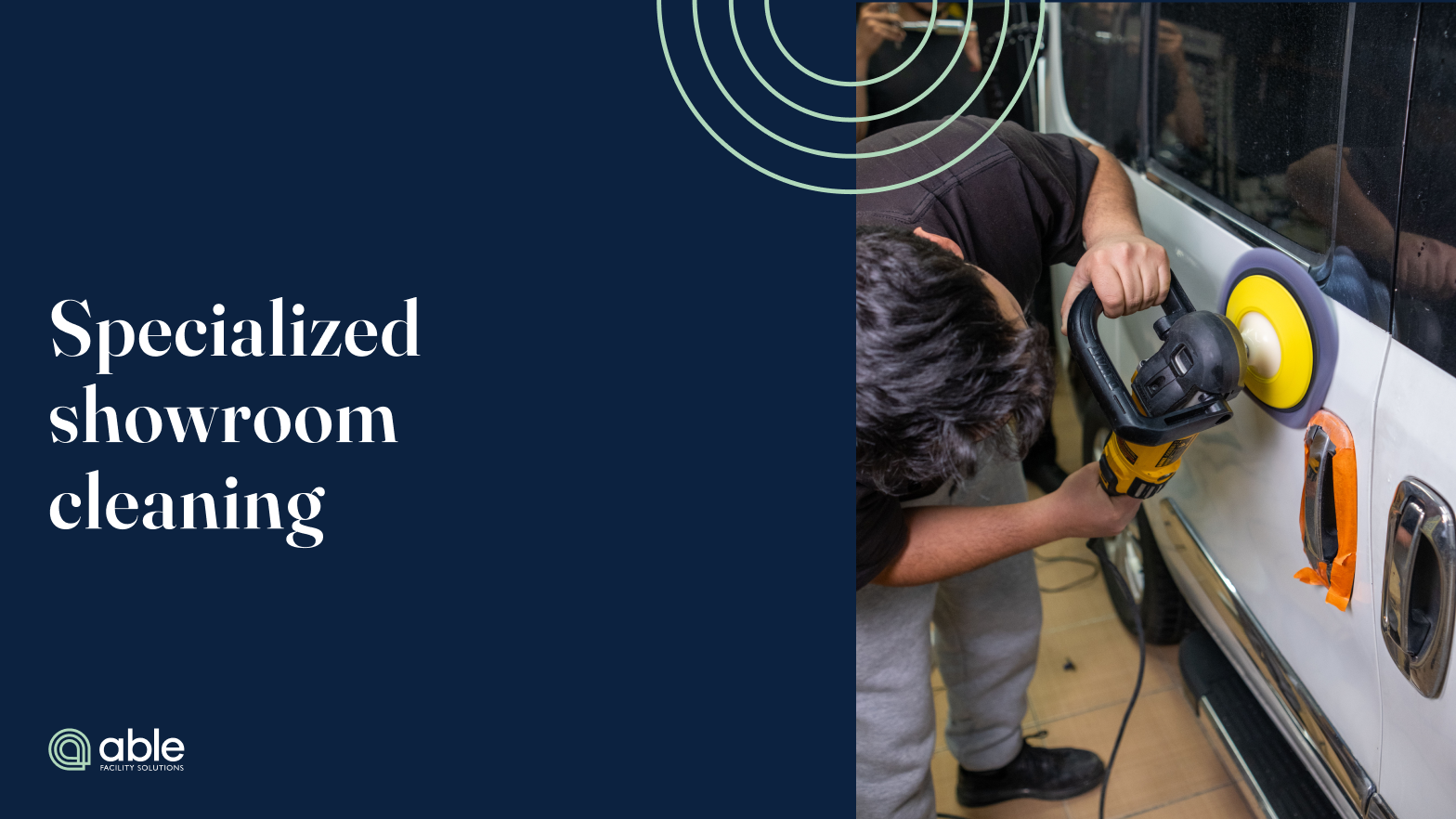
A high-stakes environment like a luxury showroom requires more than just visual tidiness. If your cleaning crew treats your showroom floor like a standard office lobby, you are damaging your brand’s image. I have found that one tiny scratch on a display can hurt the whole customer experience. Many facility managers still believe all commercial cleaning is the same. In high-end retail and automotive sales, generic janitorial models prioritize speed over surface integrity. I recommend viewing specialized showroom cleaners as a critical risk-mitigation strategy for your high-value physical assets.
The short answer
Generic janitorial services often use abrasive tools and reactive chemicals that permanently damage premium showroom surfaces. Specialized care involves material-specific detailing and mechanical floor scrubbing to protect the brand's physical identity and inventory value. I recommend using a W-2 workforce to ensure these technical standards are met consistently.
The technical gap: why office cleaning fails luxury retail
Standard office cleaning service protocols are designed for durability, not delicacy. In a corporate lobby, a structured office cleaning framework using a mop and a bucket of all-purpose cleaner might work. However, luxury showrooms use sensitive materials that require a clinical understanding of chemical reactivity.
Implementing technical commercial cleaning standards
Chemical reactivity on premium veneers
I recommend auditing your current inventory of wood veneers and high-end laminates. Many common janitorial cleaning services rely on high-pH degreasers or ammonia-based solutions. These chemicals strip the protective oils from natural wood and cause clouding on synthetic finishes. Once these finishes are damaged, the repair costs often exceed the annual contract value of the cleaning service itself.
The danger of micro-scratches on acrylic and chrome
I suggest examining your fixtures under high-intensity LED lighting. If you see swirl marks or fine scratches, your current cleaning company may be using dirty microfiber cloths or the wrong scrubbing pads. We focus on these sensitive materials to prevent damage:
- High-gloss acrylic displays
- Polished chrome and stainless steel accents
- Natural stone and marble pedestals
- Custom wood veneers and exotic finishes
- Architectural glass maintenance including tempered partitions
- Digital touchscreens and interactive kiosks
Showroom floor care: beyond the mop and bucket
Showroom floors are not just walking surfaces; they are the stage for your inventory. A standard mop only redistributes contaminants like oil and fine grit. This can lead to permanent staining or dulling of the finish. In high-traffic environments, daily maintenance is the only way to mitigate seasonal salt damage and urban grime. Professional floor cleaning services for commercial spaces ensure that these delicate surfaces remain pristine.
Removing industrial contaminants: tire marks and oil
Luxury automotive dealerships face unique challenges with rubber transfer and fluid leaks. Standard mopping fails to lift embedded tire marks and instead creates a slippery film. To solve this, facilities must adopt a dual-standard cleaning approach. It should balance showroom aesthetics with degreasing in service bays. I recommend using specialized mechanical scrubbers with specific down-pressure settings to lift contaminants without scouring the surface.
Maintaining the high-gloss reflection
To keep a Class A look, facilities must follow daily floor burnishing protocols. This protects the store's image from heavy foot traffic. These protocols keep the stone or concrete’s natural shine. They also help prevent lasting damage from incorrect flooring maintenance methods.
Comparison of cleaning methods
| Technical criteria | Standard mopping | Specialized showroom scrubbing |
|---|---|---|
| Contaminant removal | Surface redistribution | Deep mechanical extraction |
| Finish protection | Potential for micro-abrasions | Optimized pad-to-surface pressure |
| Chemical safety | All-purpose/High-pH | Material-specific pH-neutral agents |
The W-2 advantage in high-stakes environments
I have found that the greatest risk to a luxury showroom is a lack of accountability. Many commercial janitorial services rely on subcontracted labor, which leads to inconsistent training and high turnover. For organizations considering how to scale their business model, maintaining quality control through a W-2 workforce is essential. This ensures every technician is trained on the specific material science required for premium environments.
This labor model allows for highly disciplined day porter services that actively support the sales floor. When common visual merchandising barriers like dust and disorganized displays are removed, the facility becomes a silent salesperson. Employees managed and rewarded for quality help the facility meet clinical standards in cleaning and hospitality.
Philip Kotler gave this effect a name and a literature in 1973, coining the term atmospherics for the deliberate design of buying environments. His finding was stronger than most retailers expect:
“"...the atmosphere of the place, is more influential than the product itself in the purchase decision."”
Philip Kotler - "Atmospherics as a Marketing Tool," *Journal of Retailing*, 1973
How to implement a showroom audit
- 1Review the Safety Data Sheets (SDS) for all chemicals currently used on your wood and metal fixtures.
- 2Inspect your high-gloss floors for circular swirl marks or dulling in high-traffic zones.
- 3Verify if your current vendor uses W-2 employees or 1099 subcontractors.
- 4Schedule a technical floor audit to measure the current gloss levels and surface integrity of your assets.
FAQ
Why are high-pH cleaners dangerous for showrooms?
High-pH cleaners can strip protective sealants and cause chemical etching on stone or clouding on acrylics. I recommend pH-neutral, material-specific agents to preserve asset life.
What is the difference between aesthetic and clinical cleaning?
Aesthetic cleaning focuses on what you can see. Clinical cleaning reduces biological load and protects materials using ISSA standards.
How does a W-2 workforce reduce risk?
W-2 employees get direct training and supervision, so specialized surfaces are not damaged by wrong tools or chemical mixing.
Specialized care is an investment in the longevity of your physical identity. If you are ready to upgrade your facility maintenance, schedule a walk-through with Able Facility Solutions today.