
Most facility directors treat sanitization and disinfection as synonyms. However, selecting the wrong chemical for a high-traffic institutional area is an operational risk that compromises safety. The common spray-and-wipe failure creates a severe financial and regulatory liability. Choosing the correct disinfectant for every environment remains vital for maintaining a healthy workspace.
The short answer
I have found that the difference between sanitizing and disinfecting is often misunderstood as intensity. It is actually about which pathogens they target. Sanitizing lowers bacteria to safe levels, while disinfecting kills bacteria and viruses. In my experience, failing to respect the specific dwell times required for each chemical is the most common cause of hygiene program failure.
Visual appeal matters to occupants, but the real risk is not meeting EPA-registered efficacy standards for killing pathogens. Mastering the technical hierarchy of cleaning builds a strong base for a compliant program. It helps teams tell the difference between soil removal and true microbial reduction.
The technical distinction
By using an accountable, in-house W-2 labor model, Able Facility Solutions can match chemicals to specific pathogen risks. Sanitizing reduces bacterial counts to public health standards, while disinfection kills both bacteria and viruses. Adhering to strict dwell times and order of operations protects occupants and assets. It ensures disinfectants are not applied to dirty surfaces. It also ensures they are not wiped away too soon.
Defining the sanitization threshold
Sanitization is a reduction tool. It involves lowering the number of germs to a safe level determined by public health standards. This is the operational baseline for food contact surfaces or classroom desks. The goal is to manage bacterial load rather than achieve total eradication.
The disinfectant mandate for viral threats
When the threat shifts to viral pathogens, sanitization is insufficient. While sanitizers kill bacteria, they are not intended to kill viruses. A disinfectant must be used to stop the transmission of viruses. This distinction is critical for healthcare sites and schools during peak respiratory seasons.
Viral load management often requires a proactive defense strategy to handle high-volume contagion risks. Beyond physical safety, managing the mental impact of these outbreaks needs clear communication. It also needs fact-based information consumption. This helps staff and occupants manage anxiety during a public health crisis.
Comparing sanitization and disinfection metrics
Sanitization vs disinfection comparison
| Feature | Sanitization | Disinfection |
|---|---|---|
| Target Pathogens | Bacteria only | Bacteria and Viruses |
| EPA Registration | Antimicrobial pesticide | Higher efficacy threshold |
| Common Use Cases | Food prep, light touch | Restrooms, high-risk touch |
Understanding contact time requirements
Facility directors must monitor their team's dwell time. A surface disinfectant is only effective if the surface stays wet for the full time listed on the label. If a crew sprays a door handle and immediately wipes it dry, the chemical reaction stops. To ensure this efficacy reaches complex geometries where manual wiping often misses spots, electrostatic disinfection provides the necessary 360-degree wrap-around coverage.
Surface compatibility and substrate protection
The hidden costs of improper chemical use appear as asset damage. Using harsh disinfectants on sensitive materials can lead to delamination or abrasive damage. Protecting a commercial floor care investment requires pH-neutral products. These products should meet kill claims without damaging the VCT finish. Common risks include:
- Chemical evaporation before the kill-claim is reached
- Pathogen survival leading to cross-contamination
- Surface damage from incompatible chemical pH levels
- Regulatory non-compliance during health inspections
Operational standards in high-volume environments
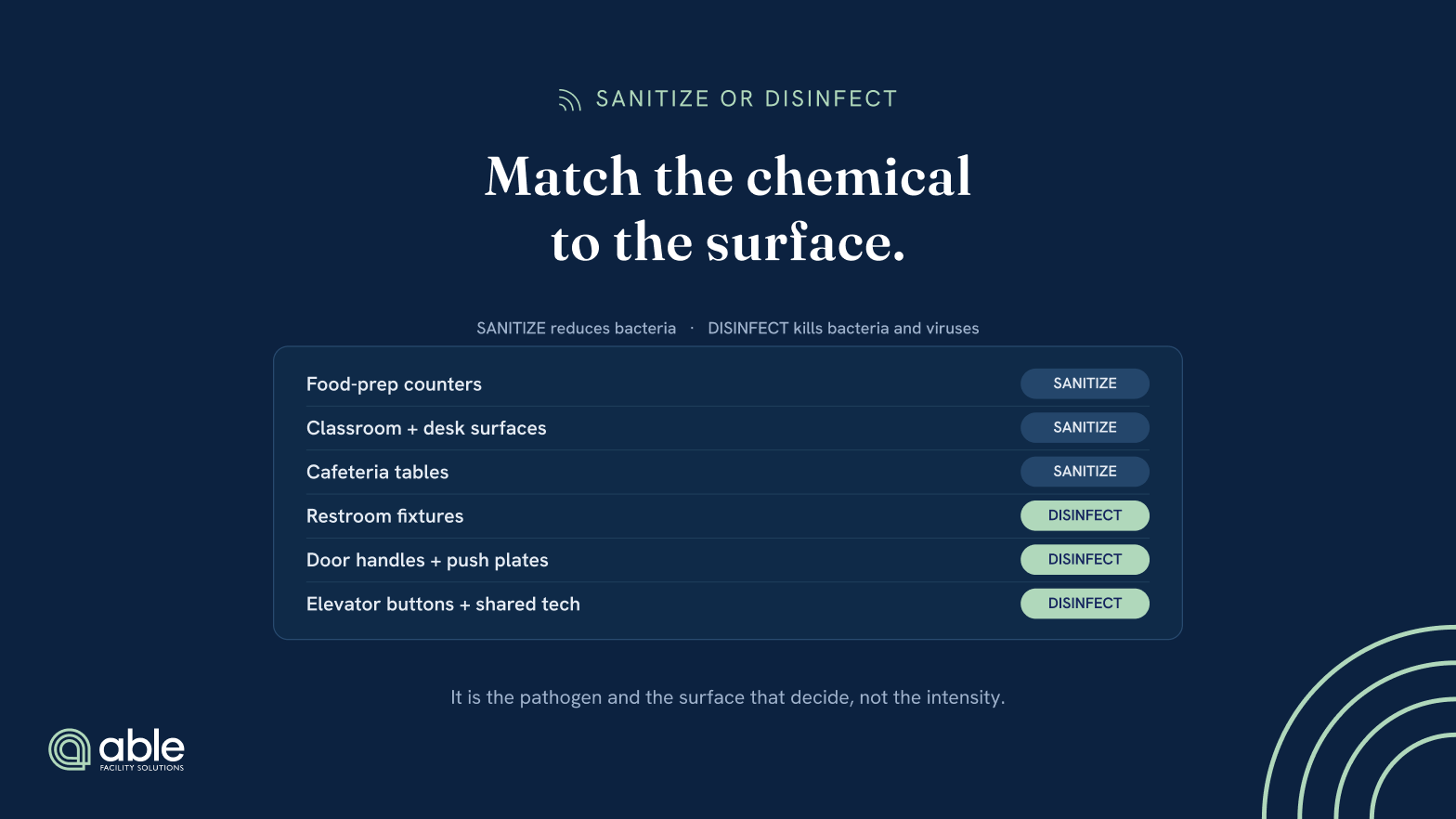
Maintaining hygiene in healthcare and educational facilities requires a tiered approach. Food contact surfaces in cafeterias must be sanitized to prevent chemical contamination of meals. Restrooms and entryways require a dedicated disinfectant to handle heavier biological loads. Modern green cleaning programs use green commercial cleaners to reach these kill rates. They do this without the corrosive gas found in older industrial formulas.
In K-12 environments, the focus stays on sanitization for general areas to keep germ counts low. However, when an outbreak occurs, teams must move to clinical-grade disinfection standards. Relying on W-2 labor ensures that these technical details are followed on the floor.
Auditing your chemical program
- 1Review all current EPA labels for required dwell times.
- 2Verify that commercial floor cleaning services use surface-compatible chemicals.
- 3Audit the training logs of W-2 self-performed teams.
- 4Inspect high-touch areas for signs of chemical-induced substrate damage.
- 5Cross-reference inventory against the EPA List N for viral efficacy.
Next steps
The right chemical choice depends on the specific pathogen risk and the surface material. Our W-2 teams follow these technical standards to keep facilities safe. This creates accountability that subcontractors cannot match. A professional facility walk-through can help review your restaurant cleaning hygiene program. It can also help ensure compliance with these standards.
Not sure what your facility needs? Use our 60-second tool to build a tailored cleaning recommendation and cadence.