
A single failed health inspection can destroy a restaurant's reputation faster than a bad review ever could. In the high-stakes Tri-State market, visual cleanliness is no longer the standard. Documented sanitation is the new requirement. I have found that many property managers confuse looking clean with being sanitary. This mistake carries significant legal and operational liability.
The short answer Survival in modern hospitality requires a shift from reactive scrubbing to a technical sanitation system. Managers should integrate W-2 accountability with food-safe chemical protocols and documented task mapping. This helps ensure audit-readiness and protects the brand against the high costs of hygiene failure.
The high cost of hygiene gaps in hospitality
I recommend looking at the data to understand the stakes. Systemic hygiene failures are a leading cause of foodborne illness in the U.S. They create major liability for restaurant groups. When sanitation protocols fail, the business faces more than just a fine. It faces a total loss of consumer trust.
“Around 44% of reported foodborne disease outbreaks are linked to restaurants, with 48 million Americans sickened annually.”
Diner retention is directly tethered to these standards. In my experience, customers have a low tolerance for even minor sanitation lapses. The impact on diner choice is clear:
- 90% of diners identify cleanliness as a critical factor in their choice of establishment
- Visible grime in restrooms or dining areas signals poor BOH hygiene to guests
- A single negative health grade can lead to an immediate 20% drop in revenue
- Repeat business depends on the perception of clinical-grade safety
Defining FOH vs. BOH cleaning requirements
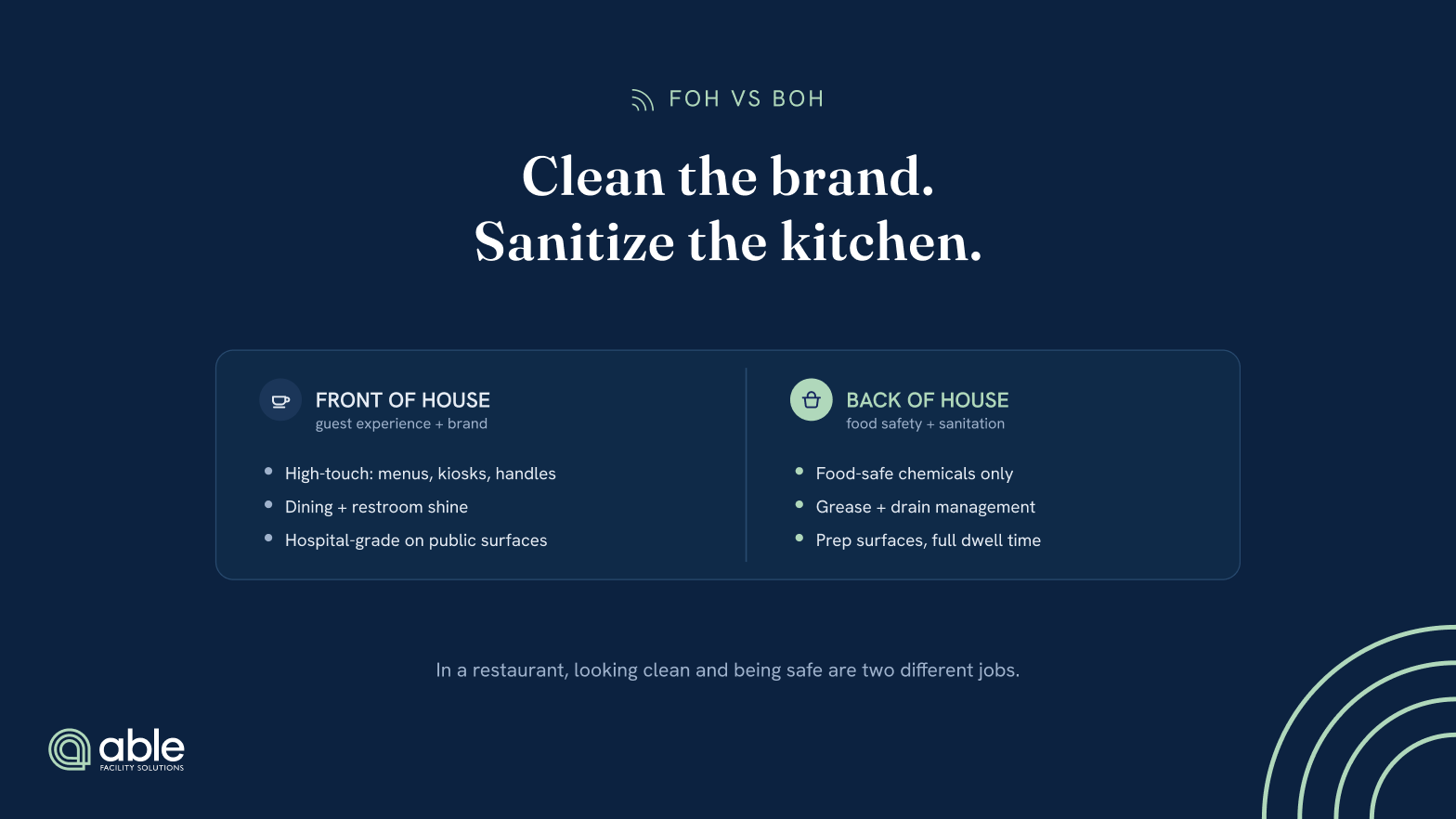
Guest experience vs. food safety
Front of House (FOH) cleaning focuses on the guest experience and brand perception. I have found that this requires constant attention to high-touch surfaces like door handles, menus, and kiosks. However, FOH cleanliness is often purely aesthetic, focusing on dust and fingerprints rather than microbial safety. Adopting professional hospitality cleaning standards bridges this gap by utilizing hospital-grade disinfectants that are safe for public areas but effective against pathogens.
Grease management and technical sanitation
Back of House (BOH) requirements are strictly technical, focusing on grease management and food safety. I recommend using non-toxic, food-safe chemicals in all prep areas. This helps prevent chemical contamination, which is a common health inspection citation. To ensure food contact surfaces are biologically safe rather than just visually clear, staff must follow the technical hierarchy of cleaning and disinfecting to apply the correct dwell times and order of operations.
The infrastructure of compliance
I have found that even the best cleaning crew cannot overcome poor facility infrastructure. Sanitation outcomes are directly impacted by having the right tools in the right locations. If a prep area lacks immediate access to sanitation supplies, the risk of cross-contamination increases quickly.
Infrastructure data box
| Metric | Finding |
|---|---|
| Restaurants with soap and water in prep areas | 30% |
| Correlation with poor utensil sanitation | High |
| Impact on health code compliance | Critical |
This data suggests that many facilities fail inspections because of physical layout issues. I recommend that managers prioritize the installation of dedicated handwashing stations. You should also ensure that daily housekeeping checklists include the replenishment of these critical supplies.
Why the W-2 workforce is your best defense
Accountability in high-stakes environments
The labor model you choose for your commercial cleaning services determines your level of risk. In my experience, the W-2 accountability model at Able Facility Solutions ensures high inspection readiness. Subcontracting is often too fragmented. When staff are direct employees, they are trained on specific office cleaning services checklists. They are held to a standard of documented performance that 1099 workers simply cannot match. This level of oversight is vital for cleaning and hospitality sectors where safety is paramount.
Moving beyond subcontractor brokers
Subcontractor brokers often lack the oversight required for high-stakes environments like commercial kitchens. The quality gaps in these models often lead to missed tasks. Health inspectors flag these issues immediately. I recommend a self-performed model to maintain control over the sanitation environment.
Labor model comparison
| Feature | Subcontractor Risks | W-2 Self-Performed Benefits |
|---|---|---|
| Training Consistency | Fragmented and unreliable | Standardized and documented |
| Accountability | Limited to the broker | Direct management oversight |
| Insurance/Liability | Often unclear or lapsed | Fully insured and compliant |
| Performance Quality | Variable by individual | Consistent brand standards |
What to do next: A roadmap for audit-readiness
To move from reactive scrubbing to a compliant environment, I recommend following these three steps:
- 1Map every cleaning task directly to local health code requirements to ensure no compliance gaps exist.
- 2Conduct a chemical audit to replace toxic agents with non-toxic, food-safe alternatives in all prep areas.
- 3Schedule a professional facility cleaning audit to identify hidden hygiene risks before the health department arrives.
Consistent hygiene is an investment in your restaurant's longevity and asset protection. It is not just a line-item expense. Protecting your guests and your reputation starts with technical sanitation. Book a call today to schedule your comprehensive facility audit.
We are taking on five new sites this month at 10% off the first contract term. The cap is deliberate, so each onboarding gets the attention a commercial kitchen actually needs. Once those five are placed we return to standard rates.