
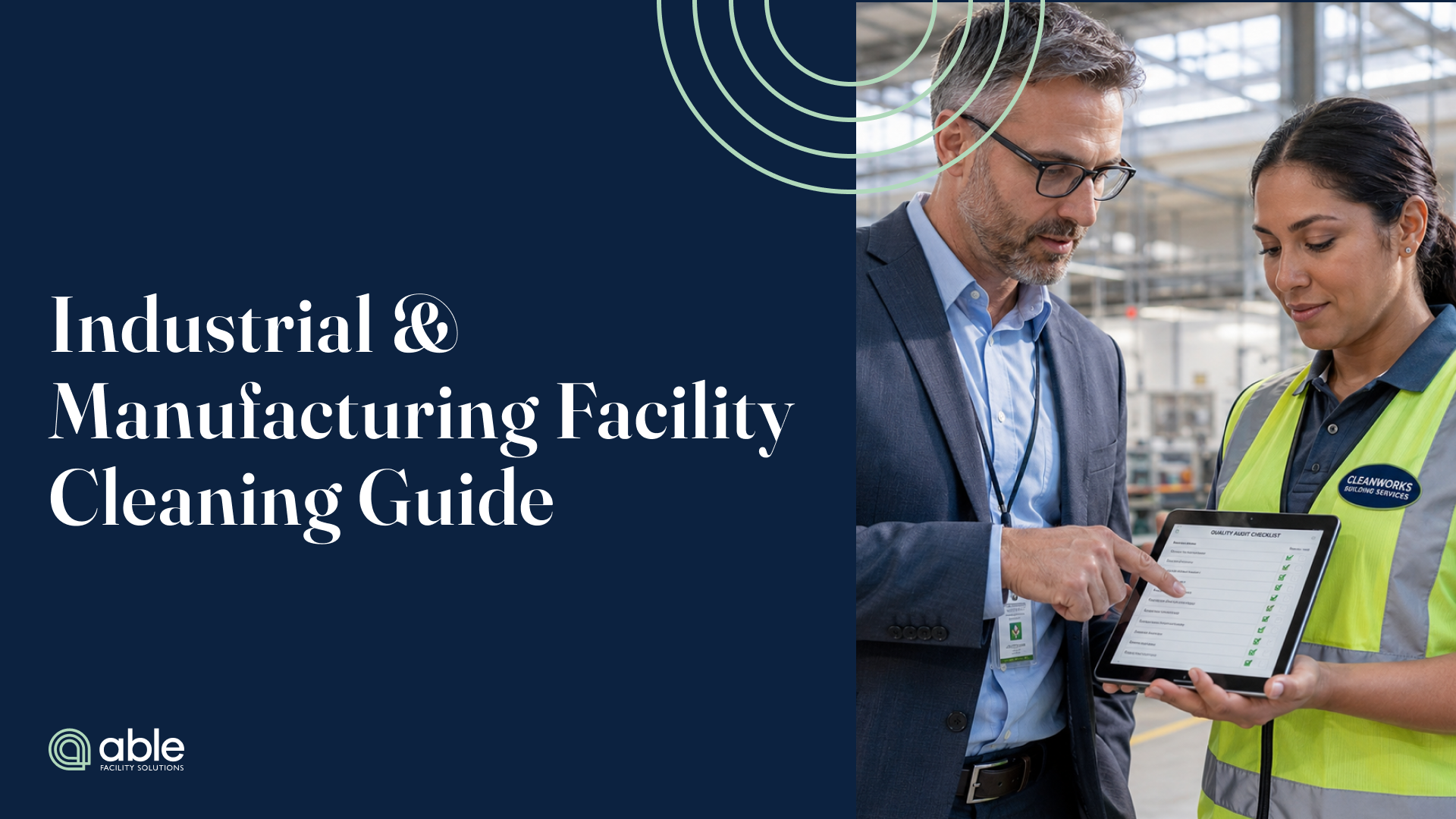
In high-traffic production environments, specialized cleaning is the difference between operational uptime and a liability that halts production. For NYC and Philadelphia facility managers, maintaining manufacturing standards involves protecting high-value building assets through objective auditing and documented cleaning frequencies. Our expertise in facilities management ensures that every square foot of your operation remains compliant and efficient.
The short answer
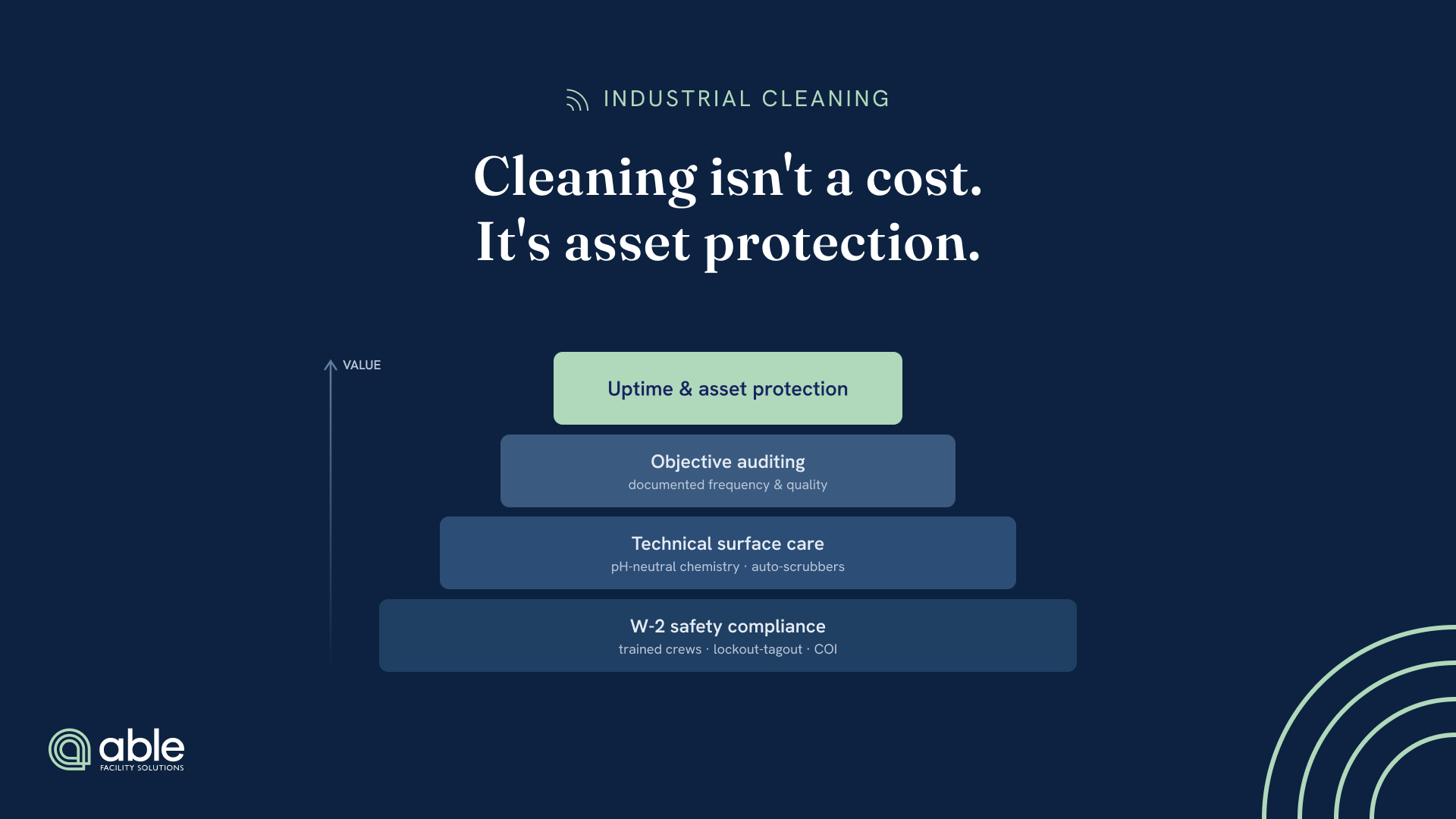
Effective industrial cleaning requires technical floor care protocols, a W-2 workforce for safety compliance, and objective auditing. Shifting sanitation from a cost center to an asset protection strategy ensures machinery longevity and eliminates 1099-related liability. Manufacturing sanitation involves specialized degreasing, ISO-compliant dust control, and pH-neutral chemistry to protect floor integrity.
Industrial cleaning as a technical requirement
Specialized industrial cleaning is a high-intent operational requirement. Maintaining these environments involves technical floor care and a W-2 workforce to manage safety in hazardous zones. Beyond general manufacturing, complex facility janitorial contracts require strict adherence to regulatory standards. Industrial cleaning services include technical degreasing and specialized sealer programs rather than surface-level dusting. Many managers study how to win janitorial contracts for a California medical facility. They want to understand the strict standards for these high-stakes settings.
Proper maintenance prevents surface degradation and reduces long-term capital expenditure on facility assets. Our team provides standardized auditing and documentation to ensure every production zone meets heavy-duty requirements. Key technical markers include:
- Surface-specific chemistry to prevent etching on polished concrete.
- Standardized dwell times for industrial-grade disinfectants.
- Mechanical scrubbing to remove abrasive metal shavings and oils.
- W-2 workforce oversight to ensure COI compliance and safety training.
Why industrial cleaning requires a specialized approach
Operational requirements for machinery
Industrial cleaning represents a high-volume search category because factory cleaning services are essential for machinery longevity. Dust and grime in a manufacturing facility can infiltrate sensitive components, leading to overheating or mechanical failure. Much like a scheduled appliance maintenance checklist supports home reliability, industrial cleaning cycles protect high-value machinery. They guard against airborne particles and chemical residue. For high-traffic lobbies or restrooms, dedicated day porter services maintain cleanliness throughout active shifts without disrupting the workflow.
Technical floor care and asset longevity
Proper VCT and industrial sealer programs prevent surface degradation in high-traffic production zones. For facilities with polished concrete or epoxy surfaces, using pH-neutral cleaning chemistry is mandatory to prevent chemical etching. Mechanical auto-scrubbers remove abrasive metal shavings and oils that can damage floor integrity. These hygiene protocols are as strict as hospital cleaning rules. They help ensure no cross-contamination occurs.
The W-2 workforce safety advantage
Self-performed work by trained employees reduces safety risks and avoids the low oversight often seen with 1099 subcontractors. In hazardous manufacturing environments, workers need training in chemical handling and equipment lockout-tagout procedures. A directly managed cleaning crew provides the accountability needed to operate around expensive assets and reduces institutional risk. Our model follows direct-hire standards to ensure consistent quality and safety across all production zones. It also includes specialized data center cleaning for sensitive hardware.
How to compare industrial cleaning company options
Selecting the right cleaning partner requires looking at specific operational capabilities rather than price points alone. Our process emphasizes these local standards:
- 1Verify W-2 status to ensure the vendor provides workers’ compensation and proper training.
- 2Review the COI to confirm coverage for industrial-specific risks and equipment.
- 3Audit the equipment list to ensure they use industrial auto-scrubbers rather than basic mops.
- 4Check for documentation regarding cleaning frequencies and quality audits.
- 5Confirm local territory knowledge regarding NYC or Philadelphia-specific disposal and safety codes.
| Feature | Subcontracted model | W-2 workforce |
|---|---|---|
| Specialized training | General janitorial | Technical industrial & safety |
| Equipment | Basic mops/vacuums | Industrial auto-scrubbers |
| Risk management | High liability gap | Comprehensive COI & oversight |
| Documentation | None | Documented quality audits |
FAQ
What is included in warehouse cleaning contracts?
Contracts typically include floor degreasing, high-ceiling dusting, mechanical room cleaning, and specialized restroom sanitation for high-manpower shifts. We also offer hospitality cleaning and manufacturing facility cleaning for diverse industrial needs.
How does cleaning prevent production downtime?
Cleaning removes contaminants that cause equipment wear and maintains clear, slip-free walkways that prevent accidents and OSHA violations. Specialized hospital cleaning and janitorial cleaning contracts help maintain these safety standards.
Why is a W-2 workforce preferred for industrial sites?
A W-2 workforce ensures that every worker on the floor is vetted and trained in safety protocols. These protocols include lockout-tagout. Workers are also covered by the vendor’s insurance. This reduces the facility manager’s liability. This is especially critical for hospital cleaning where hygiene is paramount.
Technical cleaning preserves industrial assets and prevents costly downtime. Ready to protect your facility and streamline your sanitation standards? Book a call with Able Facility Solutions today.