
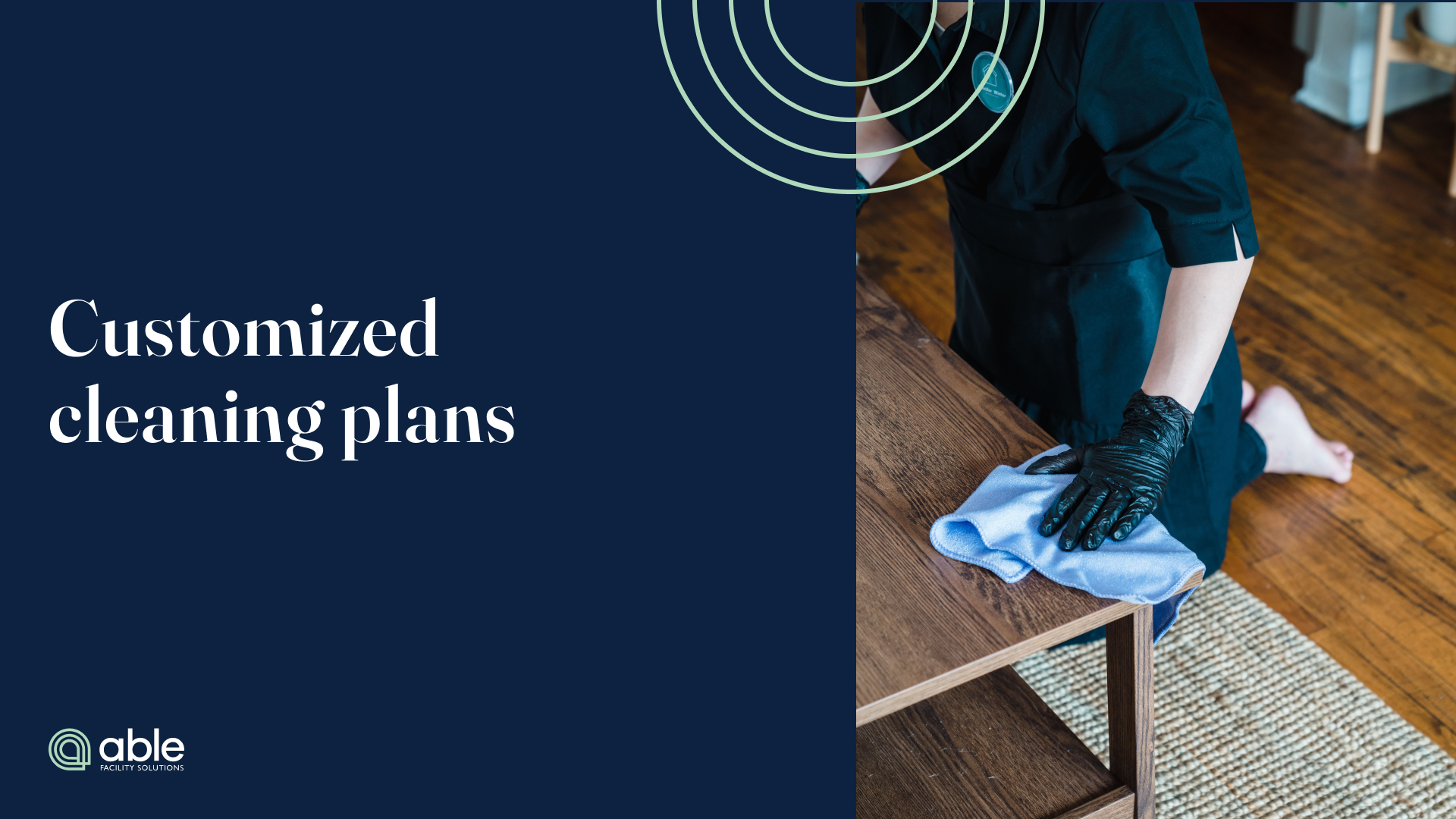
Customized cleaning plans are becoming a rarity as industry consolidation turns commercial cleaning into a faceless commodity. I have found that when large firms prioritize profits over site walks, accountability is the first thing to disappear. For high-traffic retail and commercial property managers, a generic checklist for commercial office cleaning is not just insufficient. It is a risk to facility health and asset longevity.
The short answer: how to build a customized cleaning plan for an office?
To build a customized cleaning plan, facility managers must move from static checklists to technical, data-driven scopes. This involves conducting a site-specific audit of foot traffic. You must also identify high-priority hygiene zones and set schedules for technical floor care. The plan for office cleaning services must be executed by a W-2 workforce. This ensures the accountability that large, consolidated brokers often lack.
The consolidation crisis: why your cleaning plan feels generic
Rapid M&A activity in the janitorial sector is creating a significant service gap for facility managers. Recent data shows that 43.1% of all workers are now concentrated in just 294 large firms. This is true despite 89% of firms being small. This concentration often leads to a loss of personal oversight. Local owner-operators are replaced by large firms backed by private equity.
The shift from local owners to PE-backed firms
In my experience, local owner-operators focus on keeping accounts long-term through direct supervision. Conversely, PE-backed firms often prioritize rapid ROI and high profit targets. These targets typically exceed $3M. This shift in priorities frequently results in fewer site visits. These firms also rely on lower-cost, less-accountable labor to hit financial goals.
Identifying the 'broker' model vs. self-performed service
I have analyzed many service structures and found that many national brands function as mere brokers. They sell a recognizable logo but subcontract the actual work to a network of different commercial cleaning contractors. This creates a disconnect. The primary contractor has little direct oversight of the people entering your building. This compromises security and quality standards.

Building a customized cleaning plan: 4 essential steps
- 1Conduct a high-traffic audit: Map out specific usage patterns to align labor with actual square footage. This ensures high-density areas receive more attention than low-use storage zones.
- 2Define technical floor care cycles: Establish a specific maintenance schedule for VCT and stone surfaces. This prevents the long-term damage that occurs with generic mop-and-bucket approaches.
- 3Integrate clinical-grade disinfection: Move beyond aesthetic cleaning by incorporating APPA Level 1 protocols for high-touch surfaces. 86% of employees view this as vital for their health.
- 4Establish accountability metrics: Build KPIs that require digital proof of task completion. This shifts the power back to the facility manager through transparent reporting.
Comparing vendor models: local operators vs. consolidated giants
Vendor model comparison
| Criterion | Local Owner-Operator | PE-Backed Firm | W-2 Self-Performer |
|---|---|---|---|
| Supervision | Founder-led site walks | Regional manager (remote) | Direct on-site supervisors |
| Labor Model | Mixed W-2/1099 | Heavy Subcontracting | 100% W-2 Employees |
| Pricing Focus | Retention & Quality | High EBITDA Targets | Asset Preservation & ROI |
Technical floor care: the anchor of a customized scope
Technical floor care is where a generic plan fails most visibly. I have found that treating flooring as a cosmetic concern leads to high replacement costs. A customized scope must account for the chemical and mechanical needs of each surface type. This helps maintain the building envelope.
VCT asset preservation
Dynamic plans must include specific maintenance cycles for VCT. This prevents permanent staining and finish damage. If a contractor lacks technical expertise, they may use improper dilution rates. This leaves alkaline residue that strips the finish and exposes the tile to deep-set dirt.
High-traffic surface disinfection
Effective hygiene requires more than visual tidiness. I recommend a protocol that focuses on reducing viral loads through the following:
- Verification of EPA-registered disinfectants with appropriate dwell times.
- Standardized ISSA production rates to ensure staff have enough time for clinical-grade tasks.
- Dedicated color-coded microfiber systems to prevent cross-contamination between restrooms and reception areas.
Protective measures for your janitorial contract
To reduce the risks of service disruption during ownership changes, your contract must include specific legal safeguards. I recommend these four measures:
- Anti-assignment clauses: Prevent your contract from being sold to a third party without your written consent.
- W-2 verification: Require proof of direct employment to protect against the risks of 1099 misclassification.
- Continuous insurance compliance: Use automated software to verify that all workers' compensation and liability policies stay active.
- Retention pattern analysis: Review a vendor's history of long-term accounts to find firms with high turnover or abandoned contracts.
Quality is a byproduct of accountability. This is only possible through an invested, employee-based workforce. By prioritizing a W-2 model and technical floor cleaning services commercial, facility managers ensure that asset preservation remains a long-term ROI play. It will not be a casualty of industry consolidation.
Not sure what your facility needs? Use our 60-second tool to build a tailored cleaning recommendation and cadence.