
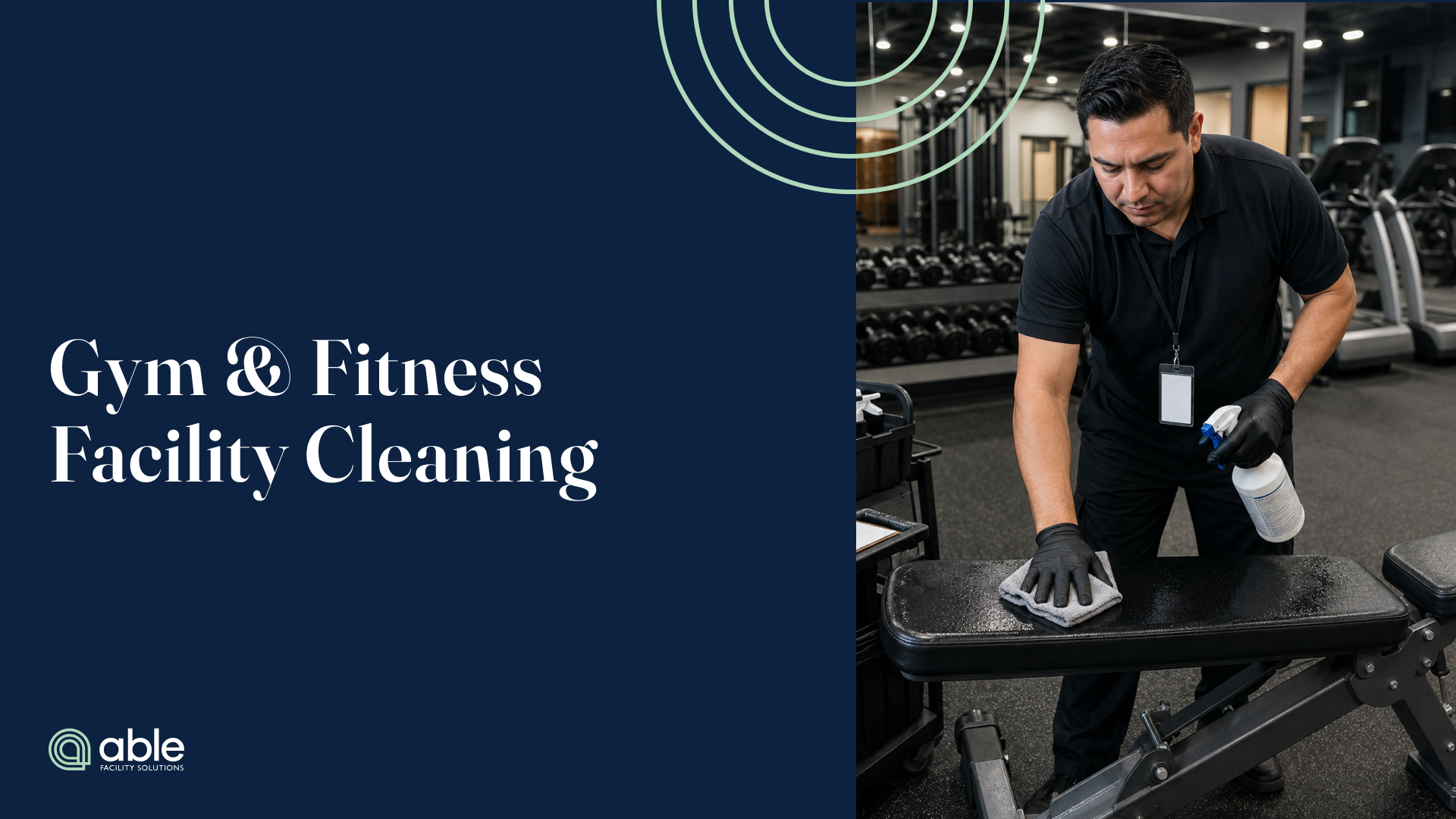
In a busy gym, there is a big difference between looking clean and being disinfected. This gap is the biggest day-to-day risk for managers. Visible cleaning often masks pathogens that compromise a facility's reputation and its members' health. Real technical disinfection in the fitness sector depends on chemistry and accountability.
The short answer
Effective gym disinfection requires a protocol-driven approach using EPA-registered solutions with verified dwell times. This is best managed by a trained W-2 workforce capable of identifying high-touch germ hotspots. By adopting medical-grade standards and direct accountability, facilities mitigate health risks and protect expensive equipment from chemical damage.
Technical disinfection versus visual cleaning
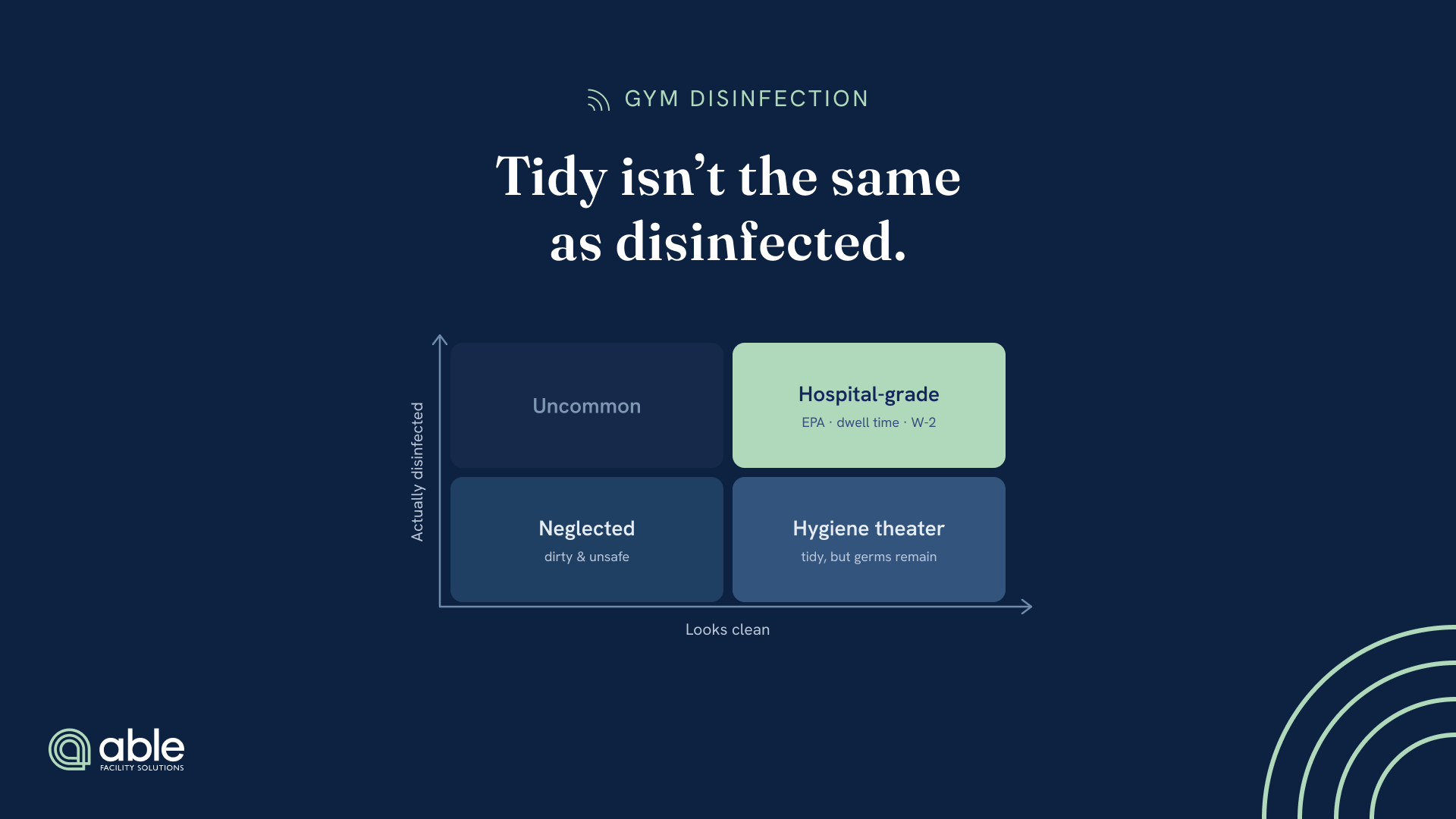
Gym sanitation requires hospital-grade disinfection and a W-2 workforce to ensure that dwell times are strictly followed. Standard commercial cleaning services often skip technical steps, creating a hygiene theater that puts members at risk. Modern standards require EPA-registered solutions and technical disinfection of high-touch surfaces to verify germs are removed. This level of precision is similar to the standards required for data center cleaning.
Adopting medical cleaning standards is a reliable way to meet hygiene expectations. This involves a protocol where chemical contact time is monitored and documented rather than surface-level wiping. Our approach uses strict medical benchmarks to keep gyms safe for high-intensity use. It follows protocols like those used in a California medical facility.
The shift toward hospital-grade disinfection
Search trends indicate a significant market move toward medical-grade standards in public facilities to meet hygiene expectations. Members now look for proof of professional cleaning instead of just tidy equipment. Many facilities are integrating hospital cleaning techniques to ensure safety. These methods are often derived from professional hospital cleaning services.
- EPA-registered solutions: Use a hospital-grade disinfectant on high-touch surfaces. These surfaces include weights and locker room benches.
- This helps lower risk.
- Chemical literacy: When a cleaning crew understands the chemistry of their products, they can ensure full disinfection.
- Microbial control: Results depend on the specific interaction between the chemical agent and the surface material, a critical factor in manufacturing facility cleaning.
- Verification: Validate standards using documented dwell times, not visual spot checks, which are common in hospital cleaning.
How to compare fitness cleaning without getting burned
- 1Confirm the workforce model: verify that the provider uses a managed W-2 workforce rather than subcontractors to ensure accountability.
- 2Audit chemical compatibility: ensure the disinfectants used will not degrade rubber flooring or equipment upholstery.
- 3Request dwell time protocols: ask for the specific contact time required for their primary disinfectant to reach full efficacy.
- 4Verify insurance and COI: ensure the vendor carries appropriate liability for high-traffic fitness environments.
Technical requirements for gym surfaces
Porous equipment and rubber floors need specific EPA-registered solutions. These prevent infections without damaging your property. Common chemicals can make rubber break down or become sticky, leading to equipment failing early. Proper technical floor care keeps your flooring safe and durable under heavy use.
For larger facilities, a day porter services during peak hours manages sweat and spills in real-time. This proactive approach prevents salt and moisture from deeply penetrating porous materials between nightly deep cleans. This level of oversight is a key part of our managed service model. It helps high-traffic areas stay compliant all day. It follows hospitality cleaning standards.
Risk mitigation through accountability
Subcontracted crews often skip wait times to finish shifts faster. A managed W-2 workforce is trained in the technical application of disinfectants. They ensure surfaces stay wet long enough to be effective. This provides the discipline needed for busy fitness centers. When evaluating how to get janitorial contracts, facility managers must prioritize these accountability measures.
Comprehensive janitorial cleaning contracts should explicitly define the frequency of disinfection and the specific chemicals to be used. Accountability is best achieved through direct employment where training and performance are managed by the service provider. Our managed workforce model helps close the gap between scheduled tasks and real sanitation results in facility management.
Comparing fitness cleaning models
| Service model | Standard cleaning | Hospital-grade disinfection |
|---|---|---|
| Workforce | Subcontracted or 1099 | Managed W-2 |
| Accountability | Visual check only | Documented dwell times |
| Chemicals | Basic detergents | EPA-registered disinfectants |
| Surface care | Universal cleaner | Material-specific chemistry |
Common questions
What does commercial cleaning consist of in a gym?
It consists of equipment disinfection and deep locker room sanitation. Rigorous medical facility cleaning standards are often adapted for these environments. It also includes frequent restroom cleaning and specialized floor care for rubber and VCT surfaces.
How to calculate commercial cleaning rates for gyms?
Rates depend on how often you disinfect and the amount of equipment that needs manual cleaning. High-traffic facilities typically require nightly service to maintain hygiene standards. Factors include square footage, the ratio of porous to non-porous surfaces, and how often high-touch points change.
What is the commercial cleaning standard for locker rooms?
Locker rooms require APPA Level 2 standards. These focus on moisture control and anti-fungal chemicals to prevent community health issues. Proper sanitation in these high-moisture areas prevents the growth of mold and the spread of skin infections.
Our team provides facility audits to benchmark your current disinfection standards against medical-grade requirements. Schedule a walk-through with Able Facility Solutions. Ensure your protocols protect both your members and your equipment investments.