
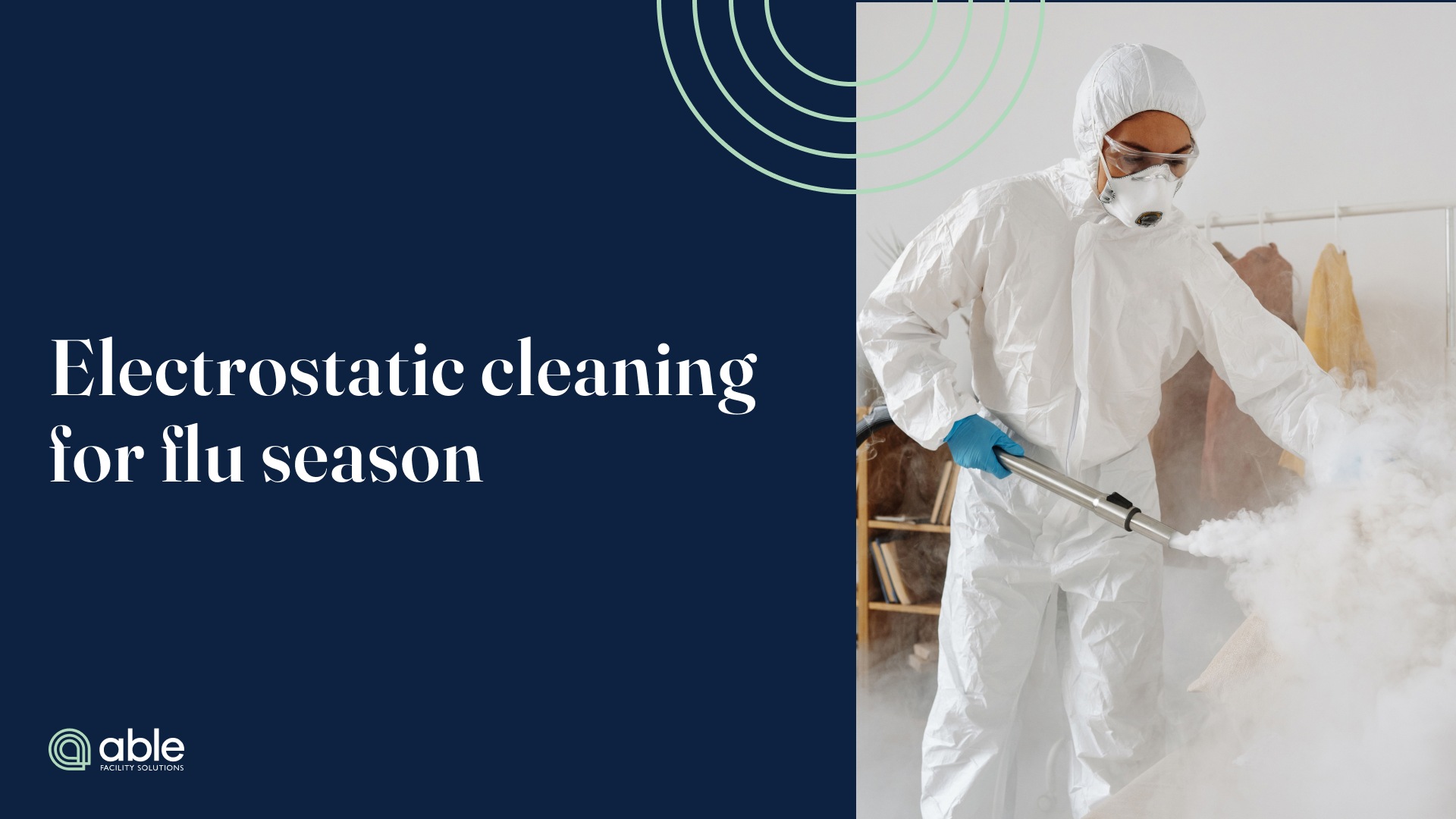
Manual wiping is a 20th-century solution for a 21st-century viral load. A recurring mistake I see in facility management is the "spray and pray" method. This involves cleaning crews who spray a surface and wipe it immediately, leaving 50% of surfaces contaminated. Relying only on manual disinfection often leaves gaps in coverage. This can speed the spread of illness during peak seasons.
I have found that professional electrostatic disinfection services help close this gap. They reach high-touch surfaces that standard methods miss. By adopting a technical approach, property managers can maintain brand standards and safety that manual efforts alone cannot sustain. I recommend viewing this as a financial calculation rather than a simple chore.
The short answer
Electrostatic cleaning uses charged particles to wrap disinfectant around surfaces, providing 360-degree coverage. This method reduces human error. It ensures proper chemical dwell times. It covers up to 10x more square footage than manual wiping. This is based on ISSA production rate standards. It is a main defense against seasonal flu outbreaks. It works best when used in a daily touchpoint disinfection program to lower viral loads.
What is electrostatic cleaning?
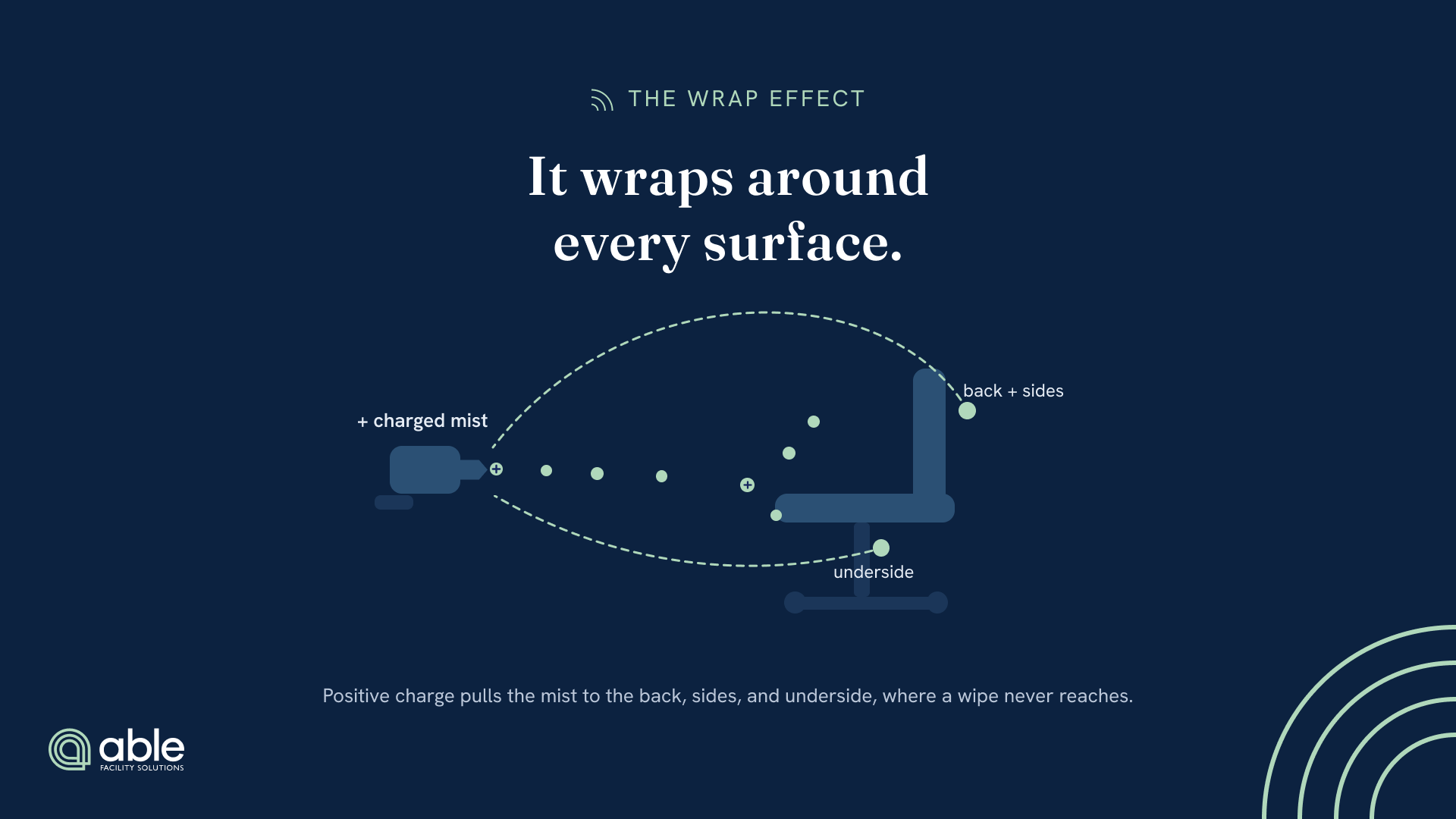
The physics of the wrap effect
Electrostatic spraying works by applying a positive charge to liquid disinfectants as they leave the nozzle. Because most environmental surfaces are negative or neutral, the droplets are attracted to them like magnets. I call this the wrap effect. It allows the disinfectant to reach the back, sides, and undersides of objects automatically. While electrostatic disinfection technology provides superior coverage, I recommend layering it on top of manual cleaning to be fully effective.
Michael Faraday established the laws of electrostatic attraction that the whole method depends on. Musing in his notebook in 1849, he wrote that nothing is too wonderful to be true if it is consistent with the laws of nature — and then added the clause people tend to drop:
“"...experiment is the best test of such consistency."”
Michael Faraday - laboratory notebook, 19 March 1849
Why manual wiping fails complex surfaces
Manual wiping often misses hidden spots. These include chair undersides and keyboard crevices, where germs can linger. This manual application also leads to uneven saturation. If a surface dries too quickly, the disinfectant fails to meet its required EPA-registered dwell time. This leaves the viral load active. Understanding the technical hierarchy of disinfection is vital to ensure facility safety.
Electrostatic vs. manual: a facility manager's comparison
Performance metrics comparison
| Feature | Manual Wiping | Electrostatic Disinfecting |
|---|---|---|
| Surface Coverage | 30-50% | 99% (360-degree Wrap) |
| Speed | 1,000 sq. ft. per hour | 10,000 sq. ft. per hour |
| Chemical Waste | High | Low |
| Consistency | Variable by worker | Highly Standardized |
The ROI of proactive seasonal disinfection
Integrating technical disinfection into your maintenance plan is a financial calculation. In places like gyms and fitness centers, using hospital-grade protocols is key. This helps protect member health and preserve assets. I have found these proactive measures offer several benefits:
- Reducing absenteeism in commercial offices by breaking the chain of infection.
- Extending asset life by avoiding the over-saturation of surfaces with harsh chemicals.
- Lowering labor burden by allowing crews to disinfect large common areas in minutes.
- Enhancing occupant confidence through visible, technical hygiene protocols.
FAQ
How does electrostatic cleaning work?
It applies a positive charge to the disinfectant, creating a magnetic attraction to negative or neutral surfaces. This creates a wrap effect that covers the undersides and backs of objects that manual wiping misses.
Does electrostatic cleaning replace manual cleaning?
No. I recommend using it as a supplemental layer. It is designed to disinfect surfaces after bio-load and visible soil have been removed through traditional cleaning methods.
What are the benefits for a facility manager?
The primary benefits are increased speed, reduced chemical waste, and standardized coverage. It allows a crew to cover 10,000 square feet per hour compared to the 1,000 square feet typical of manual wiping.
Implementation: what to do next
- 1Audit your current disinfection protocols to identify high-risk zones that manual wiping misses.
- 2Ensure your service provider utilizes a directly employed W-2 workforce to ensure strict adherence to medical-grade disinfection requirements.
- 3Establish a high-frequency electrostatic cycle for the peak flu months between October and March.
Ready to protect your facility? Book a call with Able Facility Solutions today for a facility audit regarding our self-performed teams and technical disinfection protocols.