
A pristine lobby sells the building, but a neglected floor is a liability. It can cost you 60% of your asset's lifespan. For property managers at busy retail centers and office buildings in NJ, NY, and Philadelphia, floor care is important. It is not just cosmetic. It is a capital preservation strategy. Treating it as cosmetic means you pay more for failure. Property managers often mistake a quick buff for restorative care, leading to irreversible damage. Professional commercial floor waxing provides the protection required for long-term durability.
Systematic maintenance involving commercial floor stripping and high-quality waxing prevents premature replacement. By treating flooring as a capital asset, facility managers can extend the life of VCT and stone by up to five years. This process also improves safety through slip resistance and enhances lighting via reflectivity.
The financial reality of commercial floor waxing
Flooring as a capital asset
Flooring represents 8 to 15% of total construction costs. It is one of the most significant physical investments in any facility. Every square foot of VCT or stone is a long-term asset. Comprehensive commercial floor care requires a technical preservation strategy to protect this investment.
The 20-year vs. 7-year lifespan gap
Poor maintenance can slash a floor's lifespan from 20 years to just 7. This gap represents a massive capital expenditure that most budgets cannot absorb unexpectedly. A shift toward integrated facilities maintenance significantly reduces the total cost of ownership by delaying replacement cycles. This mindset prioritizes preventative care over emergency repair, similar to the logic found in commercial maintenance checklists.
Stripping vs. waxing vs. burnishing: Know the difference
Understanding the tiers of floor care services is critical for procurement. Many vendors sell burnishing when the floor actually requires a full restorative strip. This leads to yellowing because dirt gets trapped under layers of old wax. This creates a dingy appearance that buffing cannot fix.
Maintenance tier comparison
| Method | Primary Purpose | Frequency | Est. Cost / Sq. Ft. |
|---|---|---|---|
| Routine Burnishing | High-gloss shine | Weekly/Monthly | $0.05 - $0.15 |
| Interim Scrub-and-Recot | Surface restoration | Every 4-6 months | $0.35 - $0.55 |
| Full Restorative Stripping | Total finish removal | Every 12-18 months | $0.80 - $1.20 |
The technical process: Chemical stripping and neutralizing
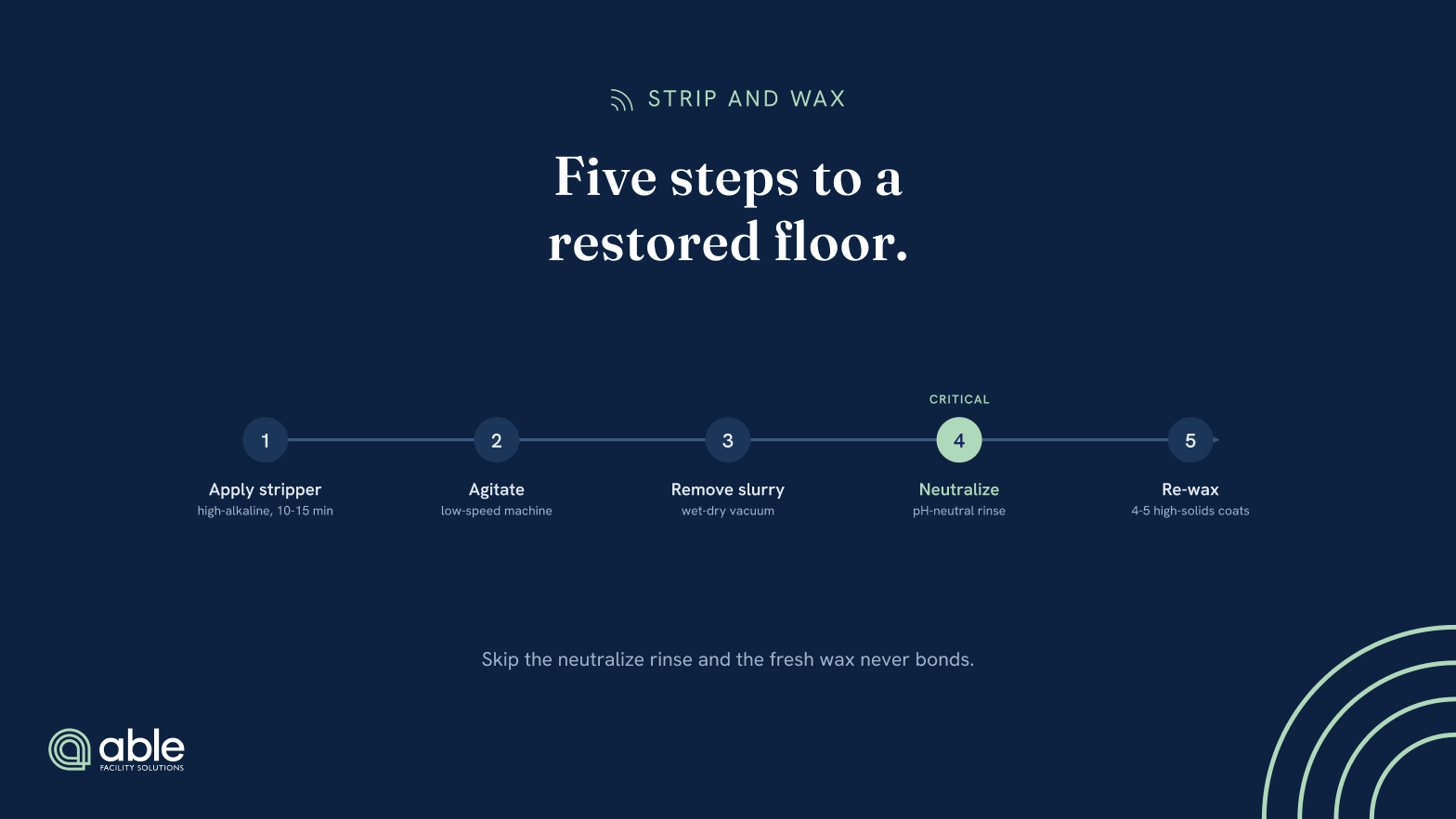
Executing a high-impact commercial floor stripping project requires technical precision to ensure the full refinishing cycle is successful. If the chemistry is not balanced, the new wax will fail to bond. This five-step protocol ensures high accountability:
- Chemical Application: Apply a high-alkaline stripper. Allow a 10 to 15 minute dwell time. This will liquefy the old finish.
- Mechanical Agitation: Use a low-speed floor machine with a stripping pad to break down the emulsified wax.
- Slurry Removal: Use a wet-dry vacuum to remove the chemical slurry before it can dry back onto the tile.
- Critical Neutralization: Rinse the floor with a pH-neutral solution to ensure no alkaline residue remains. This prevents wax peeling. Using pH-neutral chemistry is essential to prevent chemical etching.
- Multi-Coat Waxing: Apply 4 to 5 coats of high-solids polymer finish. Allow 30 to 45 minutes of dry time between each coat.
Neutralization is the step most often skipped, and it is worth understanding why. Henry Petroski spent a career on this pattern in structural engineering:
“"Successful engineering is all about understanding how things break or fail."”
Henry Petroski - *To Engineer Is Human*, 1985
How to compare commercial floor cleaning services
When evaluating providers, look past the price per square foot. Focus on these operational markers for floor cleaning services in commercial buildings:
- W-2 Workforce: Able Facility Solutions uses a W-2 self-performed labor model to ensure technical accountability and minimize liability risks compared to brokers.
- Documented Quality Audits: You must provide digital proof of performance. You must also follow site-specific protocols. This helps maintain brand standards in high-visibility settings.
- Safety Compliance: Verify that the team uses slip-resistant finishes and follows OSHA-compliant signage rules.
- Performance Guarantee: Able backs its services with a 30-day guarantee to protect against premature finish failure.
Common questions about floor restoration
How often should I schedule a full strip and wax?
In high-traffic retail environments, a full restorative service is recommended every 12 to 18 months. Determining the ideal frequency for floor refinishing depends on daily foot traffic. It also depends on consistent scrub-and-recoat cycles that protect the base layers.
Does professional waxing improve facility safety?
Proper commercial floor waxing increases the coefficient of friction, providing better slip resistance than a bare, worn floor. The enhanced reflectivity improves facility lighting, which reduces energy costs and increases visibility in commercial corridors.
Can all floor types be stripped and waxed?
VCT and certain stone types thrive under this treatment. Applying wax to non-resilient tile or certain sealed surfaces can cause permanent damage. Consult a technical floor care guide before selecting a chemical treatment.
Floor care is a high-impact investment in asset longevity. Utilizing a W-2 workforce ensures these technical standards are met every night. A professional facility audit can help assess your current surface conditions. Ready to protect your facility's assets? Book a call with Able Facility Solutions today.