
Maintaining a LEED certified facility is a balancing act between environmental stewardship and the clinical rigor required for a sterile surgical suite or a high-traffic school. Many facility managers fear that choosing sustainable practices leads to a decline in sanitation standards. A data-driven approach proves this is a false choice. By integrating LEED O+M maintenance credits with strict infection control, directors protect both their occupants and their certification status.
The short answer
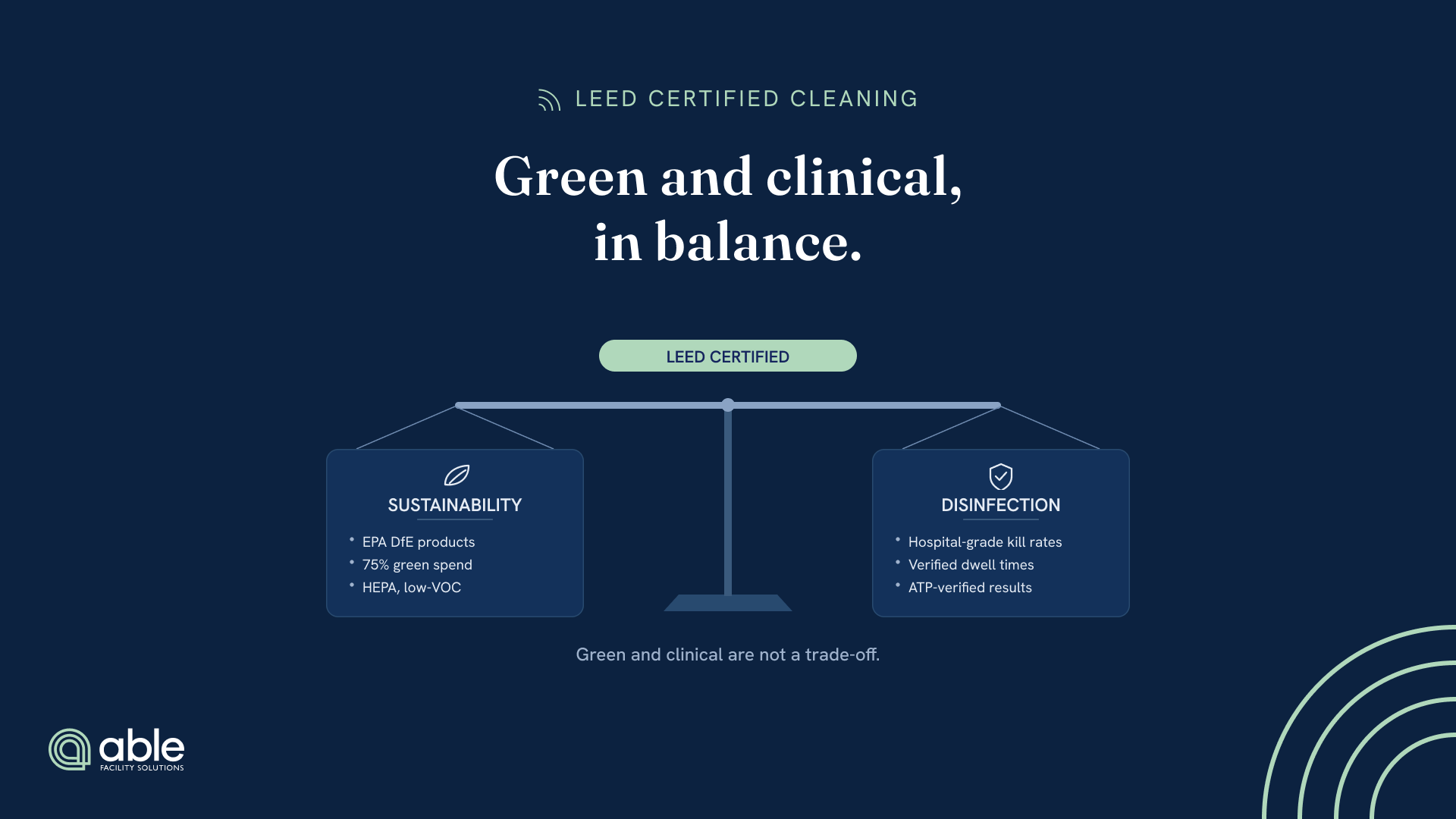
LEED certified cleaning requires a documented Green Cleaning Policy that balances high-performance disinfection with sustainable product procurement. Facilities successfully meet LEED v4.1 IAQ standards by utilizing EPA Design for the Environment (EPA) products. Success is predicated on keeping green-certified supply spending at or above 75% and verifying results through ATP testing and digital scorecards. This ensures that environmental goals never compromise occupant health or institutional safety.
Bridging the gap: LEED v4.1 IAQ and disinfection
Green cleaning plans directly reduce sick days in schools and offices by up to 25% while maintaining rigorous standards. This is particularly vital in educational environments where air quality impacts cognitive performance. By moving toward health and asset preservation, directors mitigate liability and protect their budgets. To ensure these standards are met, facility managers should use a healthcare cleaning compliance checklist to track overlapping regulatory requirements.
EPA DfE-certified products
Facilities can implement LEED certified protocols without sacrificing disinfection power. I recommend using antimicrobial agents and EPA DfE-certified products that omit ingredients known to cause respiratory or neurological harm. Modern programs achieve hospital-grade disinfection kill rates while protecting building assets from the corrosive effects of high-VOC chemicals. For medical environments, understanding the technical requirements for medical-grade disinfection is essential for patient safety.
HEPA filtration and IEQ points
Janitorial services for schools are instrumental in earning Indoor Environmental Quality (IEQ) points. This requires the use of high-efficiency particulate air (HEPA) filters, which must be documented in a written green cleaning policy from a certified provider. Combining these mechanical standards with ionized water provides a chemical-free method for deep cleaning. During peak illness periods, combining these protocols with high-frequency touchpoint disinfection helps manage viral loads across the facility.
Janitorial expenditure and documentation requirements
LEED O+M maintenance requires granular tracking of all paper, bags, and chemicals. Partnering with a technical provider facilitates these credits through verifiable maintenance logs and technical documentation. It is also important to prioritize technical certifications like CIMS-GB and Green Seal to ensure the cleaning program aligns with global sustainability standards.
LEED supply expenditure comparison
| Supply Category | Standard Janitorial Requirement | LEED O+M Threshold |
|---|---|---|
| Paper & Plastic Liners | No specific requirement | 75% Green Seal/UL EcoLogo |
| Cleaning Chemicals | Generic industrial cleaners | EPA DfE or Green Seal Certified |
| Hand Soaps | Cosmetic grade | No antimicrobial agents (unless required) |
| Equipment | Standard vacuum/auto-scrubber | HEPA-certified / <70 dBA |
Verification through ATP data and IAQ logs
Effective medical cleaning services for LEED certified buildings utilize Adenosine Triphosphate (ATP) data to verify surface cleanliness. They also track air quality complaints to ensure safety. A rigorous audit framework ensures compliance by following these four steps:
- Perform monthly facility audits using building-specific scorecards to track performance.
- Track purchase records to verify the 75% expenditure threshold for certified paper and bags.
- Log device data including HEPA filter changes and noise levels to maintain IEQ points.
- Maintain a Green Cleaning Policy with SOPs that define dwell time protocols for DfE-certified disinfectants.
Action steps for facility managers
Auditing current vendor records against LEED v4.1 standards identifies immediate gaps in compliance. A written Green Cleaning Policy backed by a professional labor model ensures every SOP is followed to protect your credits and your people.
- 1Review your current janitorial contract for LEED O+M maintenance compliance language.
- 2Request a 12-month spending report for all chemicals and paper products to verify certification thresholds.
- 3Verify that your green commercial cleaners use a W-2 labor model to ensure specialized training and accountability.
- 4Schedule a technical walkthrough with a qualified janitorial partner to identify gaps in your records.
Not sure what your facility needs? Use our 60-second tool to build a tailored cleaning recommendation and cadence.